This guide explains the common causes behind a brand new lotion pump not working and what brands should consider when choosing a reliable lotion pump supplier.
Brand New Lotion Pump Not Working? The Anatomy of a Locked Dispenser
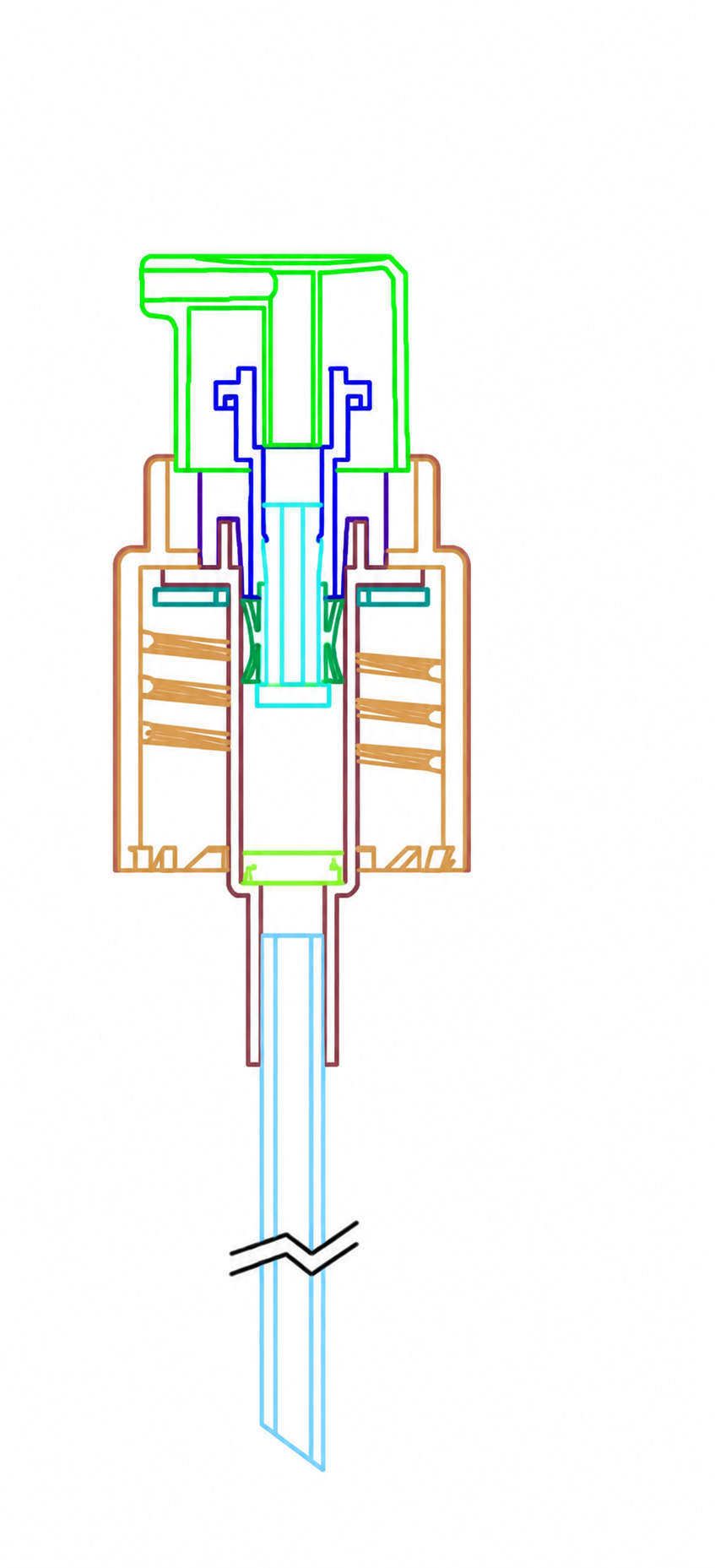
Transit locking is a common reason a new lotion pump feels stuck at first use. This mechanism helps prevent leakage during shipping, but if the pump is not fully unlocked before first use, the actuator may continue to rotate or remain difficult to press, preventing the pump from operating normally.
From the dip tube to the housing, stem, spring, and actuator, each component must fit and move with precision. If one part is misaligned or produced with inconsistent tolerances, the pump may fail to unlock, rebound, or draw product properly.
Lotion pumps commonly use either an internal or external spring design. Internal spring designs are common in standard pumps, while external spring designs keep the metal spring outside the formula pathway.
For manufacturers, first-use pump issues are usually evaluated based on transit locking, component precision, assembly control, and formula compatibility.
Why Is My Brand New Lotion Pump Not Working?
A new lotion pump may stop working for reasons beyond the pump design itself. Common causes include formula compatibility issues, clogged nozzles, incorrect assembly, or poor component tolerances.
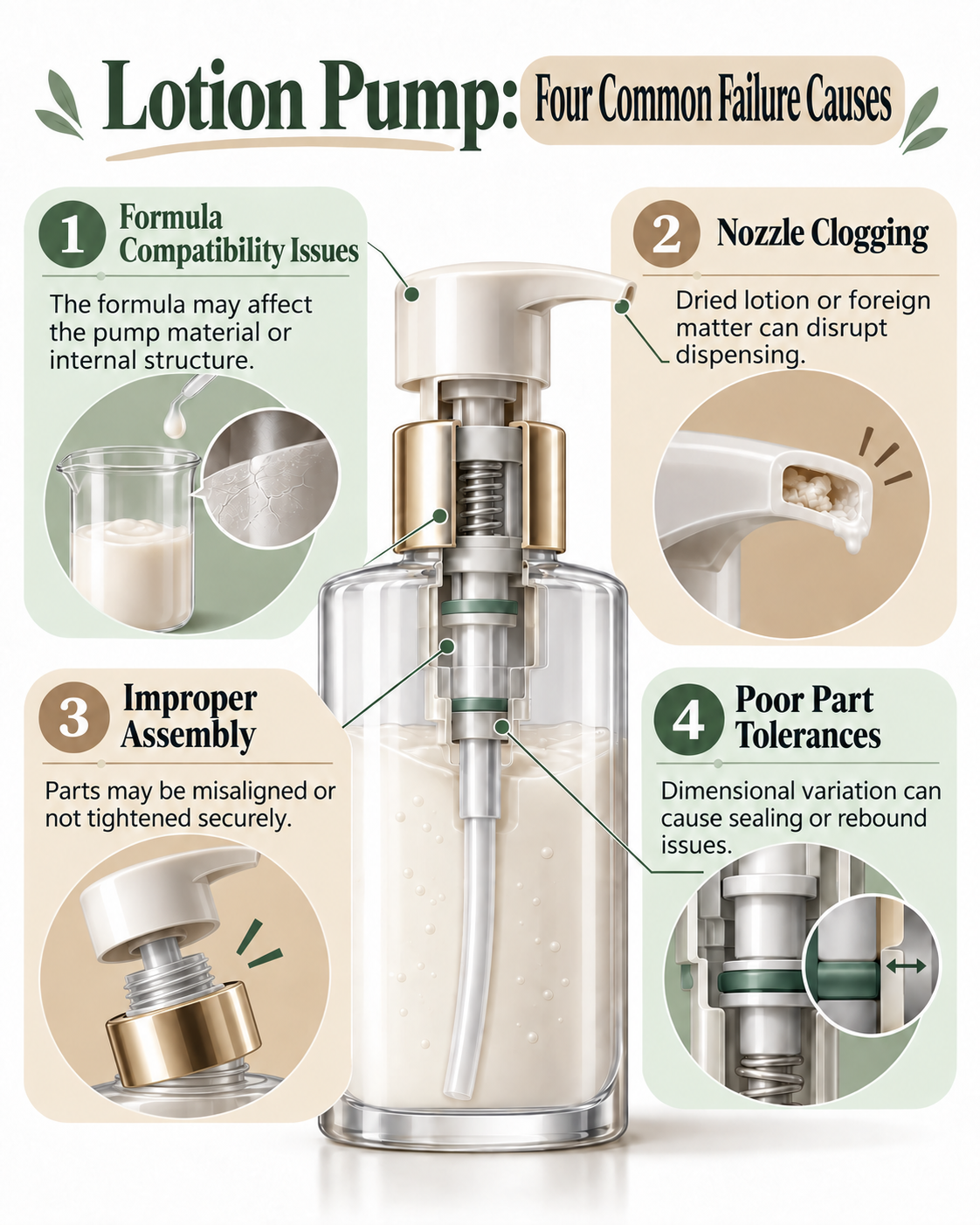
Formula viscosity is particularly important. A lotion that is too thick for the selected pump may require more priming strokes or may dispense slowly or inconsistently. Proper quality control and compatibility testing help ensure reliable dispensing performance before production.
Proper quality control and compatibility testing help ensure reliable dispensing performance before production.
🔗 Further Reading: PETG Bottle Guide: Key Factors to Know for Cosmetic Packaging
Why Pump Quality Matters to Brands
Packaging produced with inconsistent tooling precision or assembly control can create hidden performance risks, even when the components pass visual inspection. A lotion pump may look acceptable during visual inspection, but small variations in fit can affect how easily it opens, rebounds, and dispenses.
For consumers, a pump that is difficult to unlock or use can quickly become a product quality issue. Even if the formula performs well, poor packaging can lead to complaints, returns, and weaker repeat purchases.
This is why packaging selection should consider more than unit price. A reliable supplier with stable tooling, strict quality control, and consistent production helps brands protect both product performance and the customer experience.
Looking for a Reliable Lotion Pump Manufacturer in Taiwan?
CHUN JING (Sunrise Pumps) provides lotion pump solutions with internal and external spring options for different formulas and bottle designs. Through precise component control, assembly quality, and leak-resistant performance, Sunrise Pumps helps reduce first-use dispensing issues and keep pump performance stable across production batches.
Looking for a lotion pump that matches your formula, required output, bottle design, and production requirements? Contact Sunrise Pumps to discuss the right dispensing solution for your application.
📌 Further Reading:
FAQs
Q. Why does the lotion pump just spin without popping up?
If the lotion pump spins without the actuator popping up, the pump may still be in its locked position. In some designs, internal components can rotate with the actuator if the locking mechanism has not fully disengaged. This may be related to assembly fit, component tolerances, or the locking structure used for transportation.
Q. How do you prime a new lotion pump to get the liquid flowing?
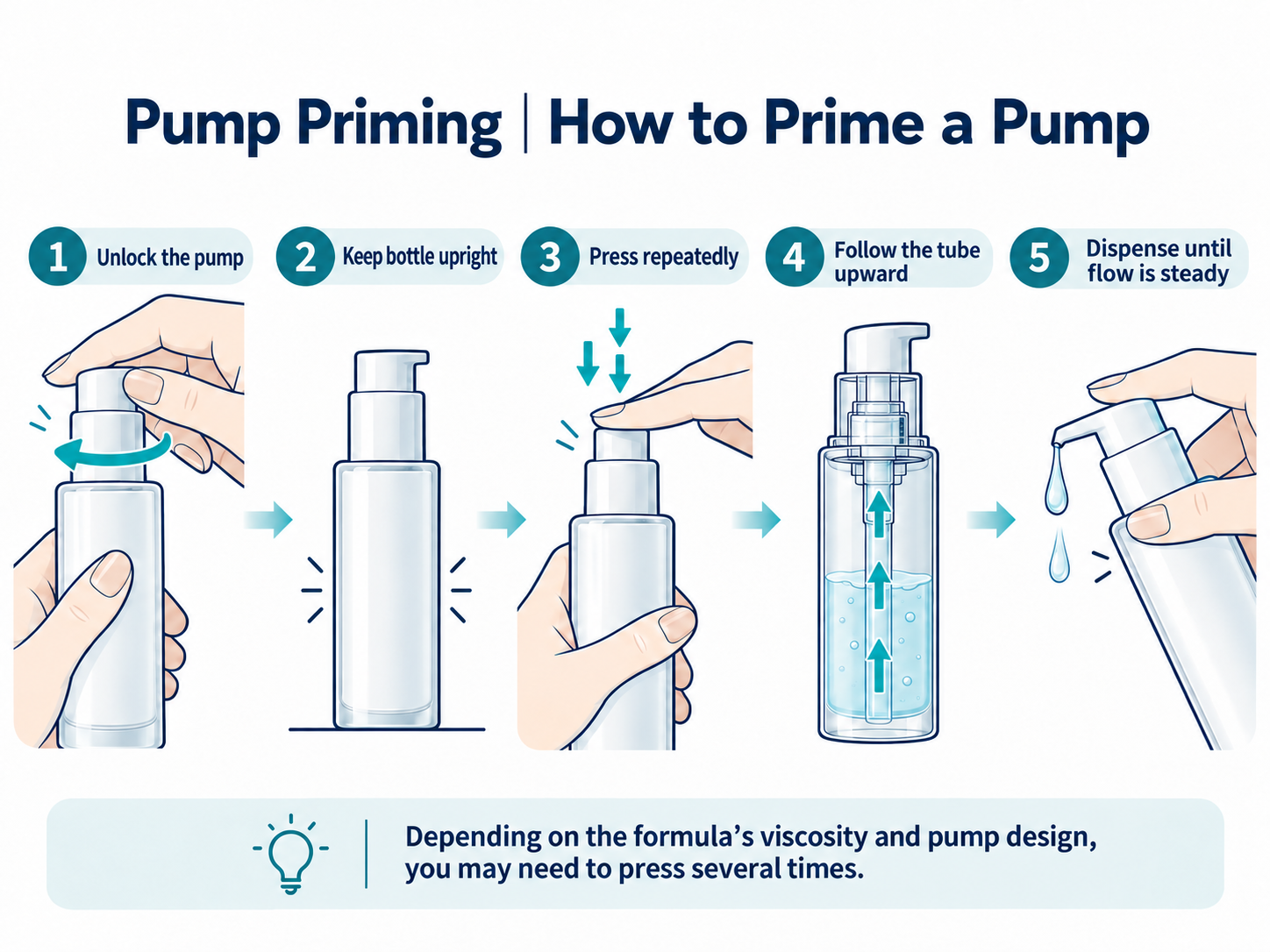
First, unlock the pump and keep the bottle upright. Press the actuator several times to draw the formula through the dip tube. Depending on the formula viscosity and pump design, several presses may be required before the liquid dispenses smoothly.
Q. Does CHUN JING (Sunrise Pumps) offer customizable dispensing solutions for different cosmetic formulas?
Yes. CHUN JING (Sunrise Pumps) provides dispensing solutions for different cosmetic formulas, bottle designs, and production requirements. Options may include different spring configurations, output volumes, actuator designs, and pump structures. Brands can evaluate formula compatibility, dispensing performance, and packaging requirements before selecting the appropriate pump.
Q. Why does a lotion pump need several presses before dispensing?
A new lotion pump may require several presses before the formula begins to dispense because the pump needs to be primed. Before first use, the dip tube and internal pump chamber may contain air rather than product.
After unlocking the pump, press the actuator several times while keeping the bottle upright. This helps draw the formula through the dip tube and into the pump chamber.
The number of presses required may vary depending on the pump design, filling conditions, and formula viscosity. Thicker formulas may require additional priming strokes before consistent dispensing is achieved.
If the pump still does not dispense after repeated priming, the pump, dip tube, filling process, or formula compatibility should be checked.